
-
×
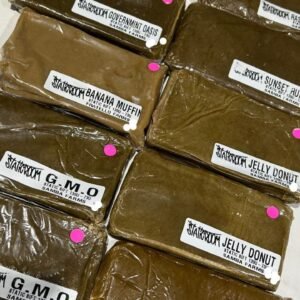 Governmint Oasis - 56G
1 × €714.00
Governmint Oasis - 56G
1 × €714.00
StaticRoom Blog
Terpene-Locked “Cold Curing”: The Craft Hash Technique Connoisseurs Are Hunting For In 2026
Cold curing has moved from niche curiosity to connoisseur standard in 2026, with controlled low-temperature protocols preserving terpenes so precisely that trials report flowers retaining up to 16 percent more terpene content than with traditional drying methods.
Key Takeaways
| Question | Answer |
|---|---|
| What is terpene-locked “cold curing” for hash? | It is a controlled low-temperature, low-humidity curing protocol designed to preserve a cultivar’s native terpene profile inside premium dry sift hash, often using temperatures near 16°C and extended curing windows. |
| How long does cold curing usually take? | Cold-cured cannabis often runs for 3 to 5 weeks, compared with 7 to 14 days for many traditional cures, giving terpenes time to “lock in” while moisture equalizes gently. |
| Why do connoisseurs in Europe prefer terpene-locked hash? | Because it delivers a thicker, terpene-forward vapor, more expressive flavor arcs, and a cleaner rendition of the cultivar than aggressively dried or rushed concentrates. |
| Where can I buy cold-cured StaticRoom dry sift hash? | You can browse the latest StaticRoom Pink and Purple lines through the main shop at TheStaticRoom shop, which serves discerning buyers across Europe. |
| What makes StaticRoom “single source” cold curing different? | We control the entire chain, from indoor cultivation to proprietary static dry sift and terpene-sensitive curing, so each jar is a precise snapshot of one farm, one harvest, one phenotype. |
| Does cold curing increase potency or just flavor? | Cold curing primarily focuses on terpene retention, but by limiting oxidative stress it helps maintain cannabinoid integrity as well, which supports both potency and effect consistency over time. |
1. What “Terpene-Locked” Cold Curing Actually Means In 2026
When we talk about terpene-locked cold curing, we are describing a curing environment tuned to protect the lightest, most volatile aroma compounds that usually vanish in hot, rushed dries.
In practice, that means holding temperature around 16°C with relative humidity near 55–60 percent for roughly two weeks or more, instead of letting hash or flower sit in a warm, uncontrolled room that strips character away.
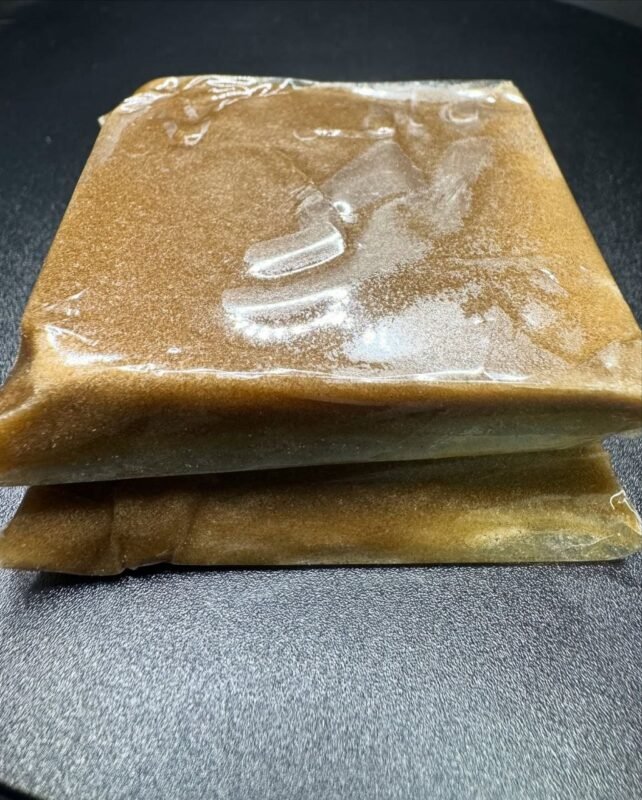
For dry sift hash, this careful environment lets trichome heads settle, rehydrate evenly, and express a butter-like or “cold-cure batter” texture that signals intact terpene content.
We design our rooms so that the cure does not cook off monoterpenes like limonene, myrcene, and pinene, which are responsible for the bright front notes that make a hash truly expressive.
2. Why Cold Curing Matters More For Dry Sift Hash Than Ever
Dry sift hash is unforgiving, because it contains almost no plant material to hide behind; if terpenes are abused, the result is flat and one-dimensional, no matter how strong the cannabinoid content is.
Our static sifting already focuses on the 139u to 75u trichome range, so pairing it with terpene-locked cold curing is the natural progression for connoisseurs who want hash that tastes as complex as a high-end dessert or a single-origin spirit.
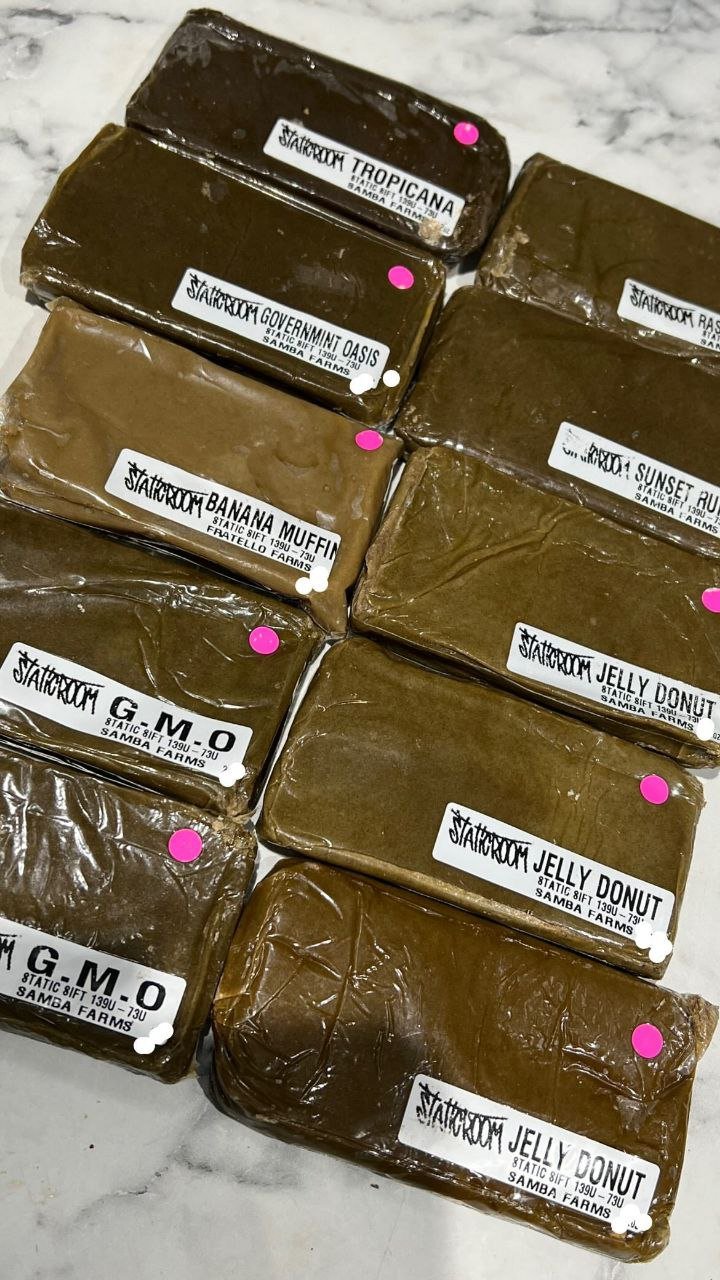
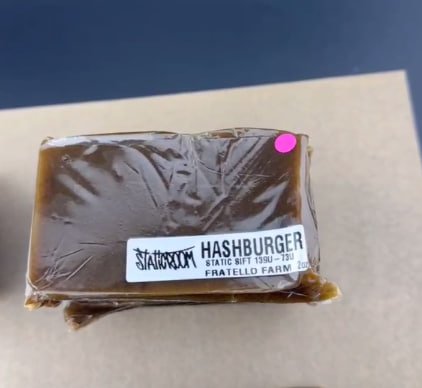
With cold curing, the surface of the hash softens gently as terpenes and residual lipids redistribute, which is why cold-cured hash often shows a glossy, almost wet sheen even though it is technically “dry.”
In 2026, our community across Europe is increasingly judging hash not just on melt grade but also on how faithfully the nose carries through to the palate, which is precisely what terpene-locked curing supports.
3. Timeline: Cold Cure Versus Traditional Curing For Hash
One of the biggest differences our clients notice is time; terpene-locked cold curing usually demands patience that many mass producers are unwilling to invest.
Cold-cured cannabis and concentrates often sit in this controlled environment for 3 to 5 weeks, compared with 7 to 14 days for many standard cures that prioritize speed over nuance.

| Aspect | Traditional Cure | Terpene-Locked Cold Cure |
|---|---|---|
| Duration | Approx. 7–14 days | Approx. 3–5 weeks |
| Temperature | Often room temp, variable | Around 16°C, tightly held |
| Terpene Preservation | Moderate, with losses | High, with minimized losses |
This infographic outlines the five steps of Terpene-Locked ‘Cold Curing’. It explains how terpenes influence the curing process.
We see this extra curing time as part of the craftsmanship, not a delay, because it lets static-sift hashbars develop that distinctive cold-cure butter texture without sacrificing clarity or cleanliness.
For buyers in Europe who care about the full journey from farm to jar, this patient approach is a key marker that they are dealing with a serious hash-maker and not a commodity brand.
Did You Know?
Cold-cured runs are typically 3–5 weeks long, while many traditional cures finish in just 7–14 days, so cold curing can take more than twice as long but delivers a noticeably richer terpene profile.
Source: Rolling Releaf
4. Science Corner: Why Terpenes Need The Cold
Terpenes are fragile, with some evaporating or degrading quickly when exposed to heat, airflow, and oxygen, which is why high-temperature drying can be so destructive.
In one postharvest review, terpene retention dropped from 82.1 percent to 29.9 percent when drying temperatures climbed to 90°C, a reminder that “fast and hot” is the enemy of flavor.
Cold curing operates at the opposite end of that spectrum, moderating temperature and humidity to slow down both evaporation and oxidative reactions inside the hash mass.
There is also emerging evidence that vapor-phase terpenes can help protect cannabinoids from oxidation during storage, which is another reason we treat terpene retention as both a flavor and stability objective in 2026.
5. StaticRoom Pink Single Source: Terpene-Locked Cold Curing In Practice
Our StaticRoom Pink / Single Source line is the clearest example of how terpene-locked cold curing pairs with high-grade static sift to produce a refined, small-batch concentrate.
These batches are priced between approximately €714.00 and €15,000.00, reflecting scale and volume, but they all follow the same disciplined cold-curing protocol once we collect the dry sift.
Grape Gas: Grape Terpenes With Fuel-Forward Depth
Grape Gas Static Sift 139u sits in our Pink line, delivering a collision of grape candy aromatics with gas-heavy base notes.
Cold curing keeps those volatile grape esters from disappearing, so the jar remains loud from first opening to the final dab.
Banana Muffin & Hashburger: Dessert Profiles Preserved
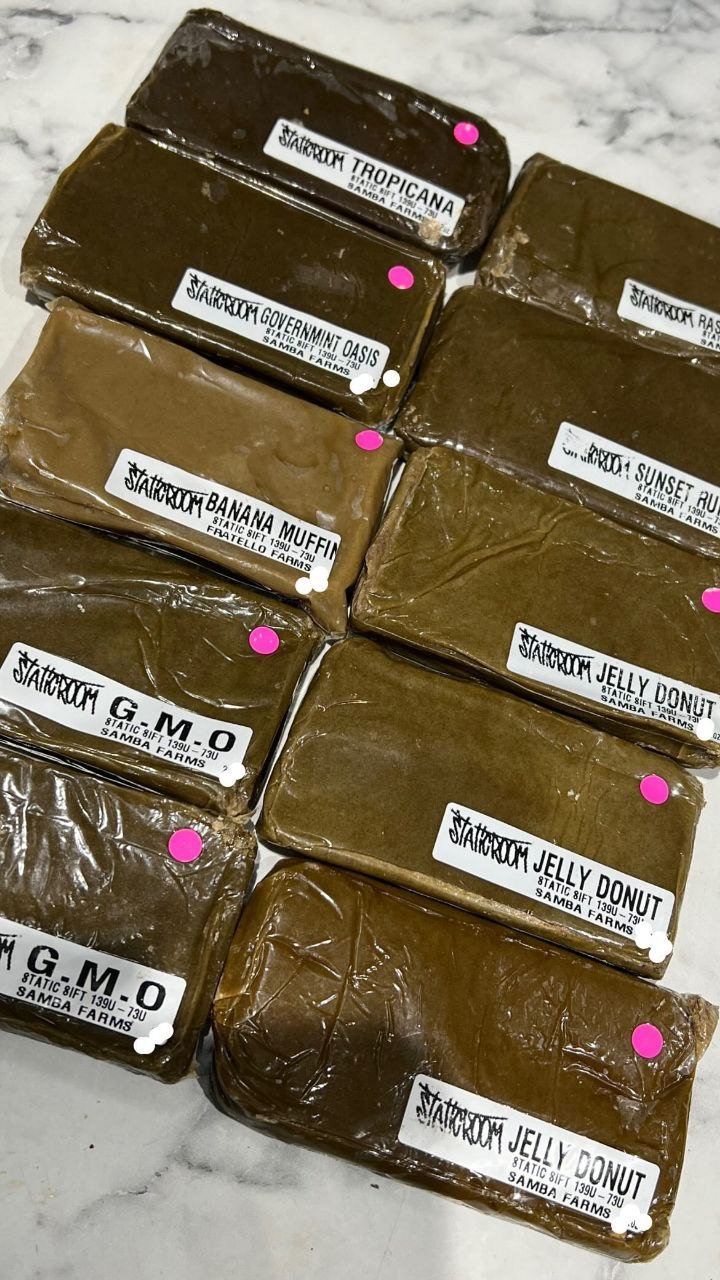
Banana Muffin Static Sift and Hashburger Static Sift showcase how cold curing keeps bakery-style terpenes coherent.
Instead of fading into generic sweetness, Banana Muffin retains ripe banana peel with doughy undertones, while Hashburger holds its savory funk right beside creamy notes that many of our clients specifically seek when they order Pink line hash in Europe.
Blueberry Cake: Fruit-Forward Static Sift For European Buyers
For buyers who prefer berry-forward profiles, Blueberry Cake Static Sift in the Pink label provides layered sweetness that relies heavily on terpene integrity.
Cold curing keeps the top-end blueberry aromatics saturated, so the flavor remains vivid even when the hash is stored correctly over weeks or months.

6. StaticRoom Purple / Indoor Single Source: Cold Curing For Indoor Expression
Our StaticRoom Purple / Indoor Single Source collections focus on meticulously grown indoor cultivars where every environmental parameter is already dialed in, so the cold cure becomes the final refinement step.
Pricing on these lots typically ranges from around €800.00 to €17,000.00, and much of that value is tied directly to the time and space we dedicate to a careful cure.
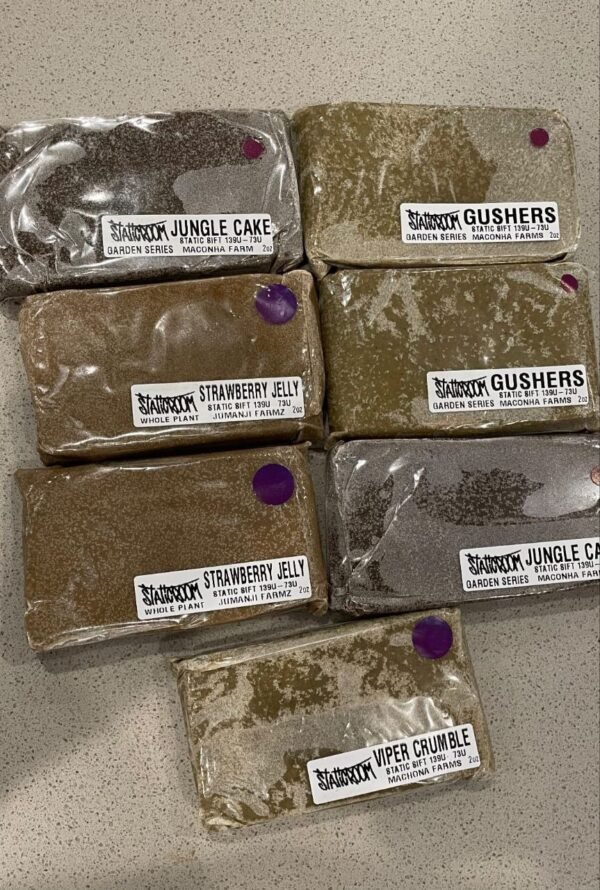
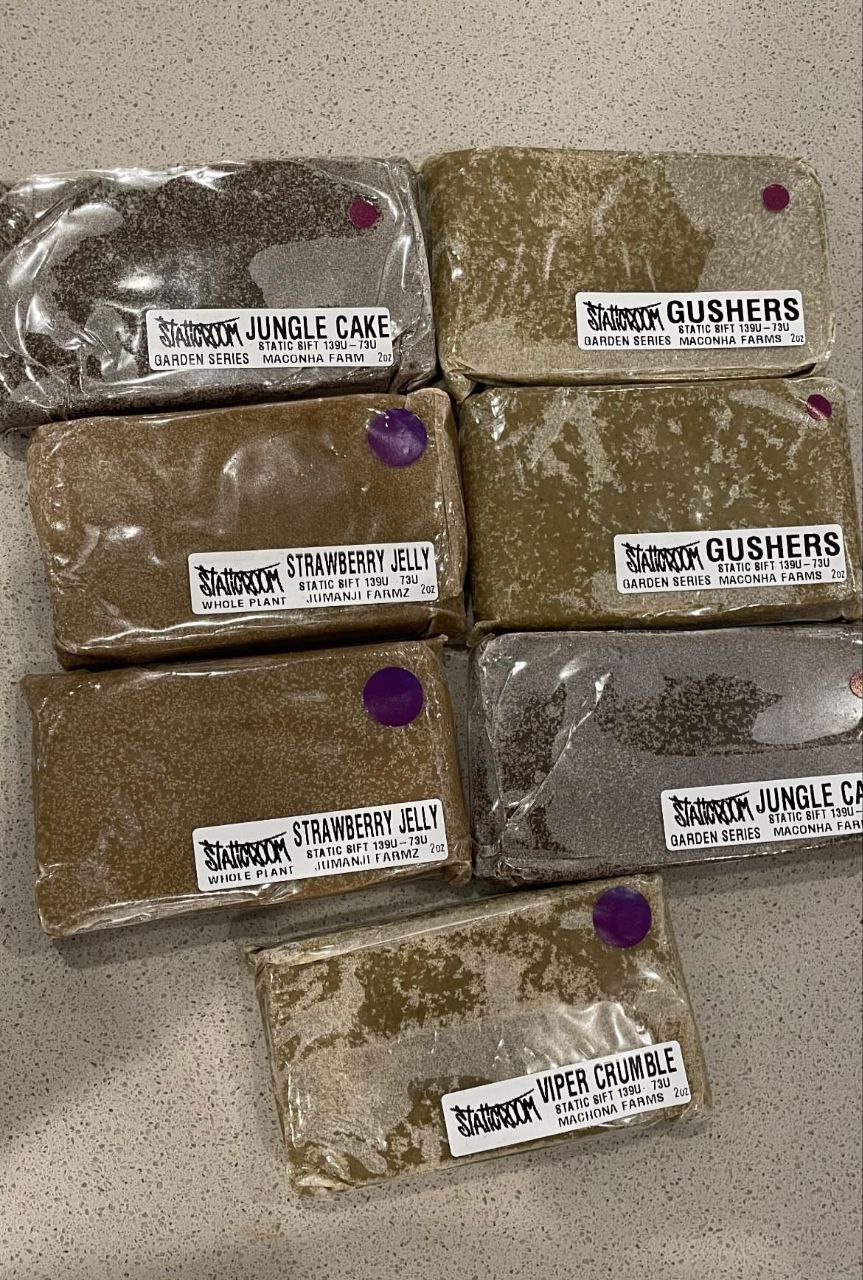
Jungle Cake: Garden Series Cold Cure
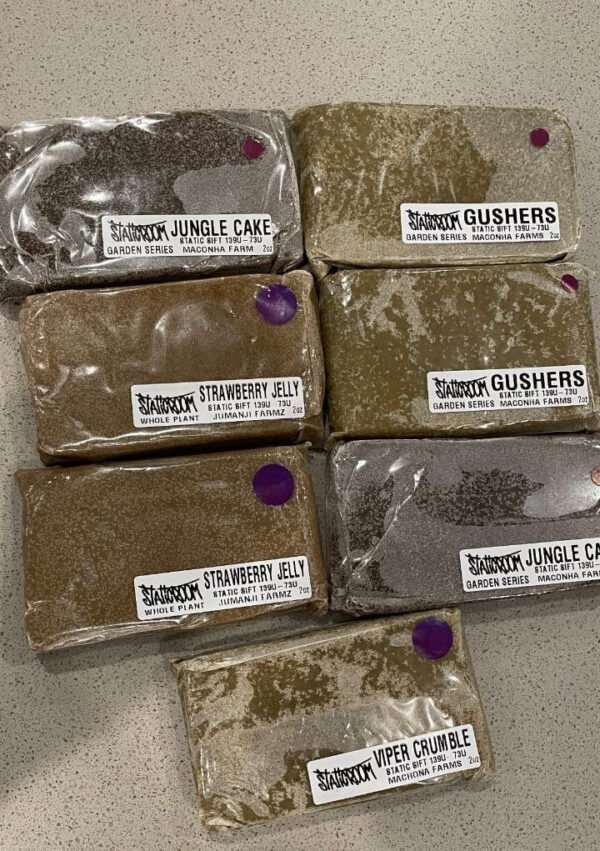
Jungle Cake Static Sift sits in our Garden Series, where a sweet, creamy gas profile depends heavily on monoterpenes that would be the first to evaporate in an aggressive dry.
Our terpene-locked protocol helps Jungle Cake retain a dense, cake-batter texture that responds well under low-temperature dabs or hash bowls.

Strawberry Jelly & Gas Mask: Whole-Plant Indoor Profiles
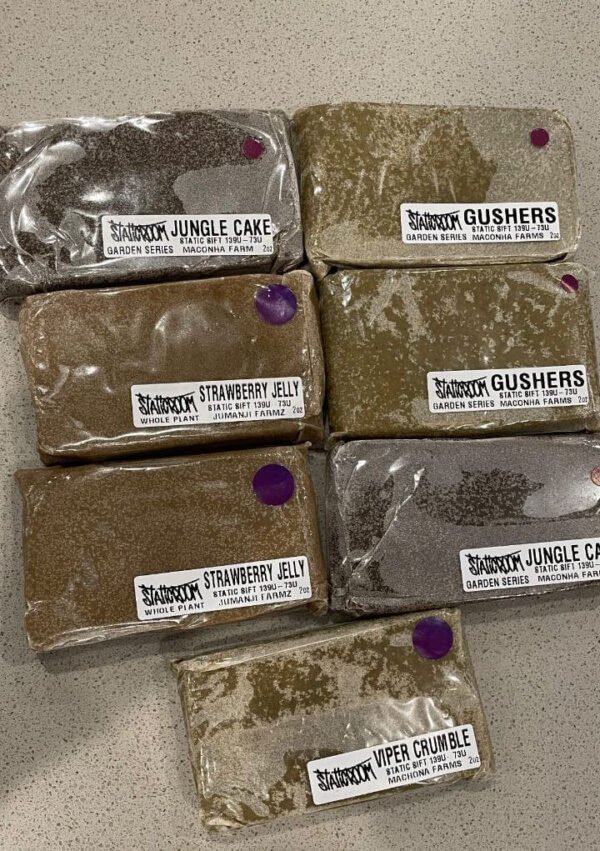
Strawberry Jelly Static Sift and Gas Mask Static Sift demonstrate how cold curing supports both fruity and heavy gas cultivars in the same Purple framework.
Strawberry Jelly leans on bright, jam-like notes that are extremely volatile, while Gas Mask is built around earthy, diesel terpenes that benefit from slow, even moisture migration inside the hashbar during curing.

Niche: Garden Series Precision
Niche Static Sift 139u–75u is another Purple label example, where we apply the same cold-curing logic to a garden-focused cultivar that rewards detailed attention.
By allowing terpenes to stabilize in a cool environment, Niche develops a layered aroma that remains stable for discerning buyers who store their hash properly after they buy from us in Europe.

7. Comparing Terpene Retention: Cold Cure Versus Other Methods
Across the industry in 2026, low-temperature approaches like cryo-curing and controlled cold curing are consistently reporting higher terpene retention than traditional room-dried methods.
One controlled environment trial using a Cannatrol Cool Cure system saw flowers retain about 16 percent more terpenes compared with conventional drying, which aligns with what we experience when we apply similar principles to dry sift hash.


Some cryo-curing protocols now claim terpene retention of 85 percent or more after harvest, which sets an ambitious benchmark for any hash-maker who is serious about flavor.
Our goal is to sit within that high-retention bracket by combining gentle drying, static separation, and a cold cure that is measured in weeks, not days.
Did You Know?
A Cannatrol Cool Cure trial reported flowers retaining about 16% more terpenes compared with traditional drying methods, highlighting how powerful controlled low-temperature curing can be.
Source: MMJ Daily
8. Texture, Melt, And Flavor: How Terpene-Locked Cold Curing Feels
Clients often ask us how they can tell if a hash has been properly cold cured, and the first indicators are usually texture and aroma the moment the jar is opened.
Terpene-locked cold-cured hash tends to show a glossy, pliable surface, sometimes with micro-greasing as the hash warms in the hand, along with an aroma that fills the room without needing to disturb the mass heavily.


On a clean surface or in a quartz banger, well-cured static sift should melt evenly at lower temperatures, releasing thick, terpene-dense vapor without harsh crackling or plant-taste interference.
Because we prioritize terpene preservation, the effect arc is often more nuanced as well, with a clear onset that reflects each cultivar’s native profile instead of a generic, muddled high.
9. Buying Terpene-Locked Cold Cured Hash In Europe: What To Look For
For European buyers who want to order terpene-locked cold-cured hash, we recommend focusing on brands that are transparent about their curing approach rather than just throwing “cold cure” on a label.
Look for details like temperature ranges, timeline, and whether the producer can explain how they handle humidity, oxygen exposure, and storage once the cure is complete.


Our philosophy is that if a producer is willing to detail their micron range for dry sift, they should be equally forthcoming about their curing regimen, because both are central to final quality.
When you buy from us, you are purchasing into a consistent curing framework that is designed specifically to protect terpenes rather than simply to pass moisture tests.
10. Simple Care Tips To Keep Terpenes Locked After You Buy
Even the best terpene-locked cold cure can be compromised if storage after purchase is careless, so we encourage our community to treat their hash like they would a fine product from a luxury cellar.
That starts with keeping jars in a cool, dark place, away from direct sunlight and heat sources, and avoiding frequent opening and closing that repeatedly exchanges headspace air.


- Keep jars sealed tightly between uses to limit oxygen exposure.
- Use clean tools to handle the hash so you do not introduce contaminants or moisture.
- Avoid refrigerating and then warming repeatedly, which can cause condensation and texture changes.
Handled with care, terpene-locked cold-cured hash maintains its nose and texture far longer than aggressively dried products, which is important for buyers who like to curate multiple strains at once instead of finishing one jar at a time.
Conclusion
Terpene-locked cold curing has become a defining technique for serious hash-makers in 2026, particularly for those of us who specialize in static dry sift and single-source expressions.
By holding temperature around 16°C, extending cure times to several weeks, and treating terpenes as a resource to protect rather than a byproduct to tolerate, we produce StaticRoom Pink and Purple hashes that offer a benchmark experience for connoisseurs across Europe who demand purity, precision, and a sensory profile worthy of the plant that created it.
